
Andrzej Wiktor
Photographer and printmaker
Andrzej Wiktor is a Polish photographer and printmaker born in 1973 in Stalowa Wola. A graduate of the National Film School in Łódź, he has worked professionally in photography for more than two decades, beginning in press photography before gradually developing a more autonomous artistic practice.
A defining aspect of his work is his engagement with noble printing techniques, particularly heliogravure and gum oil. Through these processes, photography acquires a different kind of presence: the image becomes materially dense, tonally rich, and deeply tactile. In Wiktor’s practice, process is not secondary to the image, but integral to its meaning, allowing photography to move beyond straightforward representation toward a more atmospheric and painterly visual language.
His artistic development has also been publicly framed as a movement from realism toward surrealism. This trajectory reflects a practice in which photographic precision remains important, yet increasingly opens toward symbolism, allegory, and imaginative transformation. Whether working through portraiture, historical motifs, or more atmospheric visual constructions, Wiktor creates works that stand between image and object, realism and reverie, technical discipline and visual poetry.
By combining photography with heliogravure and gum oil, Andrzej Wiktor develops a body of work distinguished by tonal subtlety, material depth, and a strong sense of inner atmosphere. His images do not seek immediacy alone; they invite sustained looking, drawing the viewer into a space where memory, form, and emotional resonance remain closely intertwined.
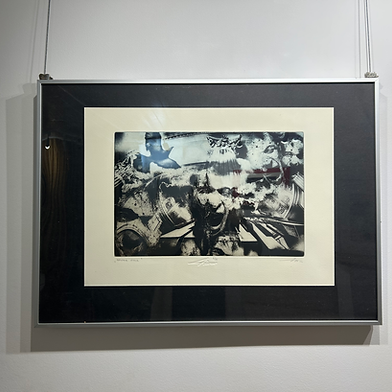
My work begins in photography, but it does not end with recording. I am interested in the moment when the image begins to exceed pure documentation and enters a space of atmosphere, memory, and inner intensity. What matters to me is not only what is shown, but how an image can hold depth, silence, and transformation.
Heliogravure and gum oil are central to this process. Through them, the image gains another kind of life: it becomes slower, denser, more tactile, more attentive to surface and tone. I am drawn to these techniques because they allow photography to move beyond immediacy and acquire a material presence that is closer to an object, a trace, or a memory.
I do not see realism and imagination as opposites. The most compelling image often emerges precisely at their threshold, where what is visible begins to carry something less literal and more inward. I am interested in works that remain precise, yet open; grounded in form, yet capable of suggesting something symbolic, atmospheric, and enduring.
My aim is to create images in which process, material, and vision remain inseparable — works that ask to be looked at slowly and that reveal their meaning through tone, structure, and presence rather than through immediate declaration.